
Next-generation engineering platform for industrial water treatment


No chemical
reagents

Using natural physical processes

Calculated mode selection

Cascade processing architecture

Compatibility with existing water treatment systems
Our history
Our story began many years ago with a simple question. Water is the foundation of life and one of the most mysterious natural environments. Why do most modern technologies manipulate it exclusively through the "language of force"—ultrahigh pressure and aggressive chemicals?
We wondered: is a different approach possible? Is it possible to use the language of natural physical processes—hydrodynamics, electromagnetic fields, resonance phenomena—to influence the properties of water more carefully and with less energy expenditure?
The search for an answer to this question sparked years of research. The idea of using the "soft power" of physical processes instead of resource-intensive traditional methods formed the basis of AQUA VORTEX technology.
We're not proposing to replace existing water treatment systems. We're developing a new physical approach that could potentially make them more efficient.
The problem we are trying to solve
Industrial enterprises around the world face the same challenges:
- High power consumption.
- Pumps, pressure and membrane processes require significant energy inputs.
- Dependence on chemical reagents
- Many processes cannot be carried out without the constant use of chemical additives.
- Equipment. Deposits and contamination of equipment
- Scale and contamination reduce the life of equipment and increase maintenance costs.
- Ecology. Growing Demands for Water Reuse
Inevitable changes in the market

Rising costs of water treatment

Membrane systems are becoming more expensive to operate.
High costs for membranes, chemical cleaning and fouling control are driving the search for new technologies.

Energy becomes a key factor
Even a small reduction in energy consumption can significantly reduce operating costs.

Environmental requirements are becoming more stringent
There is a growing demand for technologies that reduce the use of chemicals and environmental impact.

The era of intelligent water purification is coming
The industry is moving from fixed modes to intelligent process control systems.
AQUA VORTEX is being developed at the intersection of these global trends.
Our idea
To the language of "soft power," we add the understanding that no two aquatic environments are alike. Water composition, pollutant concentrations, electrical conductivity, and physical properties can vary significantly, even within a single facility.
For each water composition, most existing technologies require lengthy engineering setup, laboratory analysis, and manual selection of operating modes.
We aim to make this process significantly faster through a digital library of processing modes and intelligent selection of the most appropriate parameters.
We use a sequence of modules, where each mode is focused on a specific group of pollutants.
Key Features

Without the use of chemical reagents

Calculated selection of mode for each water profile

Modular cascade processing architecture
Using accumulated experimental data for digital control

Compatibility with existing industrial systems
Potential benefits
What we expect to confirm experimentally

Preliminary studies conducted on the first laboratory prototype showed that the effectiveness of the treatment depends significantly on the selected treatment mode. In certain modes, significant reductions in iron, chromium, phosphates, nitrates, and a number of other contaminants were observed. In other modes, reductions in turbidity, color, ammonium, lead, and other water quality indicators were noted.
The results obtained were reproduced in a series of laboratory experiments. No chemical reagents were used, and the energy consumption of the experimental setup remained low.
These preliminary data allow us to hypothesize that further research and testing will allow us to experimentally confirm the following potential benefits of the technology:

low power consumption;
no need to use chemical reagents;
reduction of deposit formation and contamination of process equipment;
the possibility of reducing the operating pressure in individual water treatment processes;
the ability to integrate technology into existing systems without replacing them.
All the listed advantages are expected and require confirmation in the course of further experimental studies and statistical processing of the obtained results.
Application areas
Where the technology can be used

Pre-treatment physical treatment prior to existing cleaning steps.
Industrial water treatment

Preparation of process water for production processes.

Recirculating water supply systems

Treatment of industrial wastewater
Water treatment before membrane technologies
Research and environmental projects

Laboratory and pilot installations for studying new processing modes.
Promising research directions
Separation and extraction of metals, including rare earth elements
Oil spill treatment
Beneficiation of low-grade ores
These areas are considered as separate research programs and are not part of the current stage of laboratory prototype development.
Current status of the project
Development Roadmap. What's been accomplished?
An engineering concept for the technology has been prepared
The design of a laboratory setup has been developed
A concept for intelligent selection of processing modes has been developed
Preliminary experimental studies have been conducted
A provisional patent application has been filed with the USPTO.
In the near future, the project focuses on three key objectives:

Creation of a laboratory prototype and conducting a full cycle of engineering tests.

Formation of a library of processing modes and development of an algorithm for automatic selection of modes.

Quantitative assessment of technology efficiency for different types of aquatic environments.
It is this stage that should provide objective experimental data necessary for further scaling of the project.
Our team
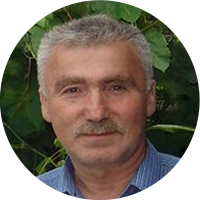
Boris Rushanik
Founder and Project Manager
PhD in Economics. Co-author of six Russian Federation patents and author of a provisional patent application in the United States. Extensive experience in developing engineering systems and process equipment in water treatment. Responsible for scientific and technical management, requirements development, testing, and technology preparation for commercialization.

Alex Milman
Head of Analytics and Knowledge Base
Mathematical and statistical processing of experimental data, development of algorithms for selecting optimal exposure modes. Bachelor's degree in Logistics and Economics, Master's degree in Management and Systems Development, PhD candidate at Bar-Ilan University (Israel). Owner of Milman Hadrachot.

Michael Rushanik
Software Developer
Over 20 years of experience developing high-load distributed server systems. Specialization: scalable backend architectures, real-time algorithms, Big Data, high-throughput and low-latency systems. Responsible for the plant control software, data collection and processing, future CAD, and monitoring systems.
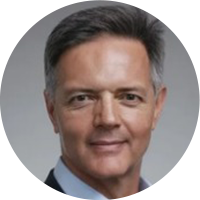
Igor Peer
Development Advisor
Founder and CEO of the venture studio Startup Mastery. Author of the book "Lean Innovation 3.0." He has over 30 years of experience in innovation management, taking technology projects from concept to investment round. Responsible for corporate structure, reaching industrial customers and licensing partners, and attracting investment.
Invitation to cooperation
We are open to partnerships
AQUA VORTEX is transitioning from an engineering concept to experimental technology validation. We are interested in collaborating with:
Industrial enterprises
Sites for pilot testing and joint technology evaluation.
Research centers and laboratories
Investors to finance the prototype creation stage and experimental program.
All the listed advantages are expected and require confirmation in the course of further experimental studies and statistical processing of the obtained results.
